The Music Works

Music Education

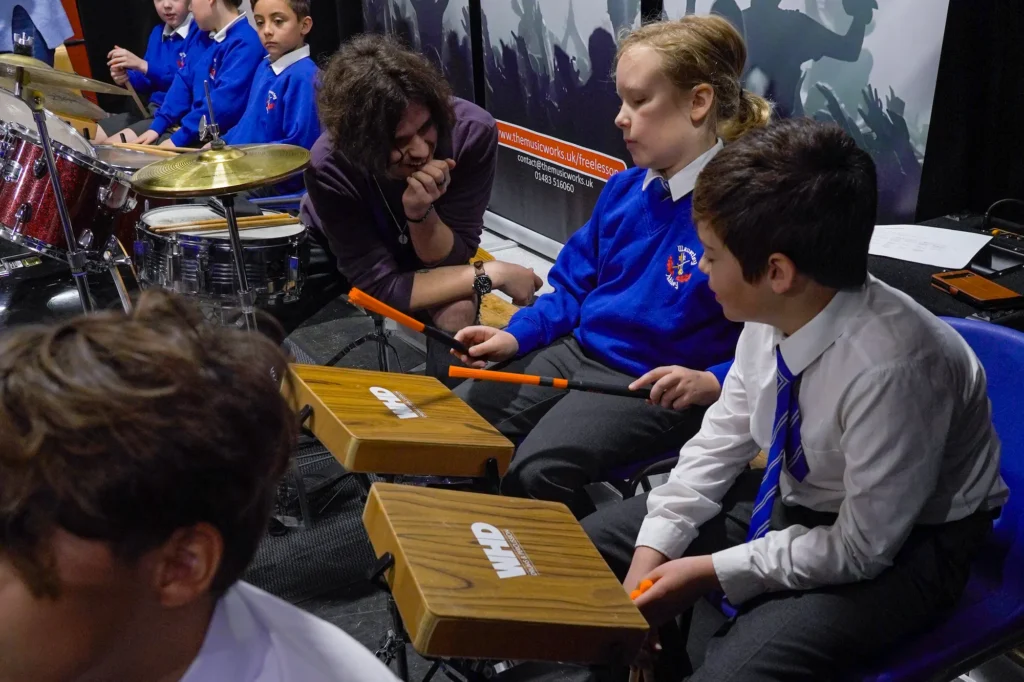
Primary school children learning percussion with a drum tutor from The Music Works

How Much Do Music Lessons Cost in Surrey? (Godalming, Haslemere & Guildford Guide)
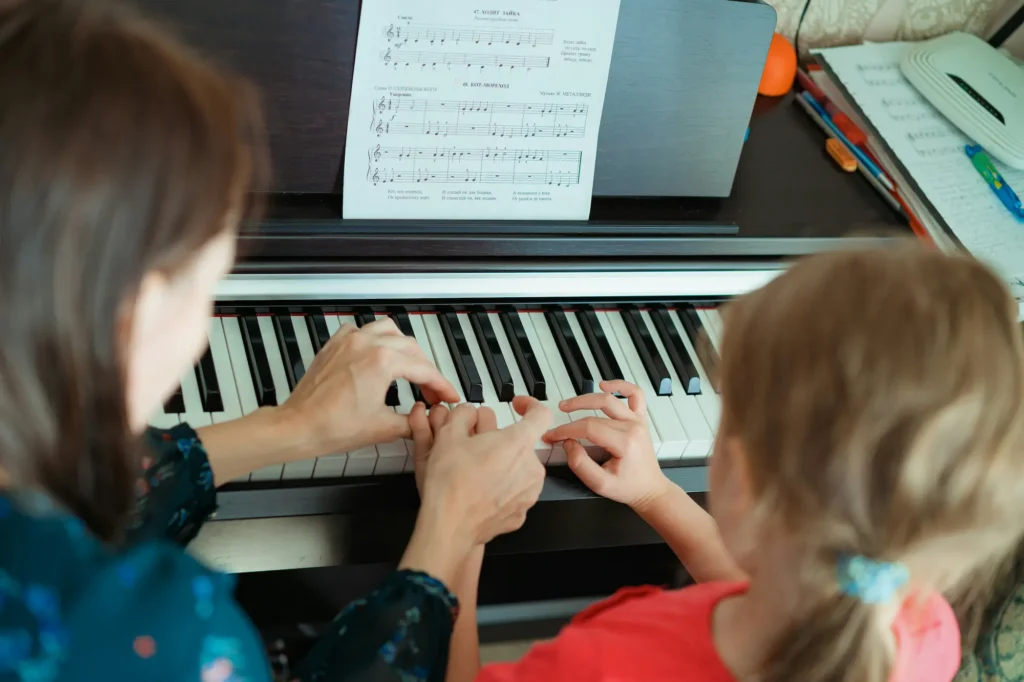
A child learning to play piano with a teacher guiding her hands on the keyboard.

What Affects the Cost of Private Music Lessons in Surrey?

When it comes to understanding the cost of private music lessons in Surrey, there are several key factors that affect what you’ll pay.

1. Geographic Area

Your location plays a major role in pricing. Here’s a quick comparison:

This shows why many families are searching for affordable music lessons in Godalming, Haslemere or Guildford — quality without the London price tag. At The Music Works, we charge the same fair rates at all three of our Surrey schools. Click here to get your infopack with our latest prices.
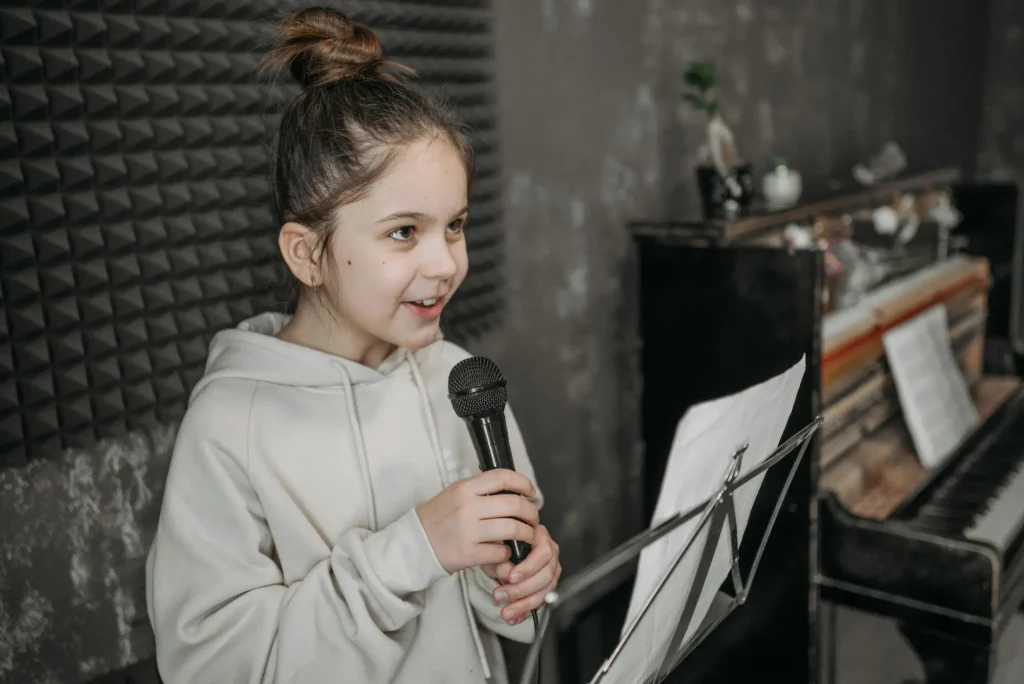
A young girl in a recording studio holding a microphone and singing from a music stand.

2. Teacher Experience

One of the biggest factors that affects the cost of private music lessons in Surrey is the experience and background of the teacher.

Some teachers are just starting out, while others bring decades of performance, teaching, or academic expertise. Typically, the more experience a teacher has, the higher the rate—but there’s more to it than that.

Formal Education

Many music teachers hold degrees in music performance, music education, or a specific instrument. Some even have postgraduate qualifications (like a Master’s in Music or a PGCE for school-based teaching), which often places them in the higher price range.

Performance & Touring Experience

Teachers who have performed professionally—whether in orchestras, on tour with bands, or in studio sessions—bring real-world experience to their teaching. While not always classically trained, these tutors often specialise in contemporary styles, composition, or live performance.

Exam Results & Student Progress

Experienced teachers are usually well-versed in preparing students for graded exams (like ABRSM, Trinity or Rockschool), auditions, and even music scholarships. Their reputation and student success rate can justify slightly higher pricing.

Specialisation

Some teachers specialise in working with young beginners, others with advanced students or those with additional learning needs. A tutor with a specific niche—like jazz improvisation or songwriting—may charge more due to their specialist skill set.

At The Music Works, we carefully match students with teachers based on their goals, level and interests. Whether you’re looking for a fun, friendly first teacher or a highly qualified mentor to help you prepare for exams or auditions, our team covers the full range of experience. Best of all, our lesson rates remain consistent across Godalming, Haslemere and Guildford, making it easy to access the right teacher without paying premium prices in one location.

If you’re unsure what kind of teacher is right for you or your child, you can find your ideal teacher by booking a free music lesson with us today!
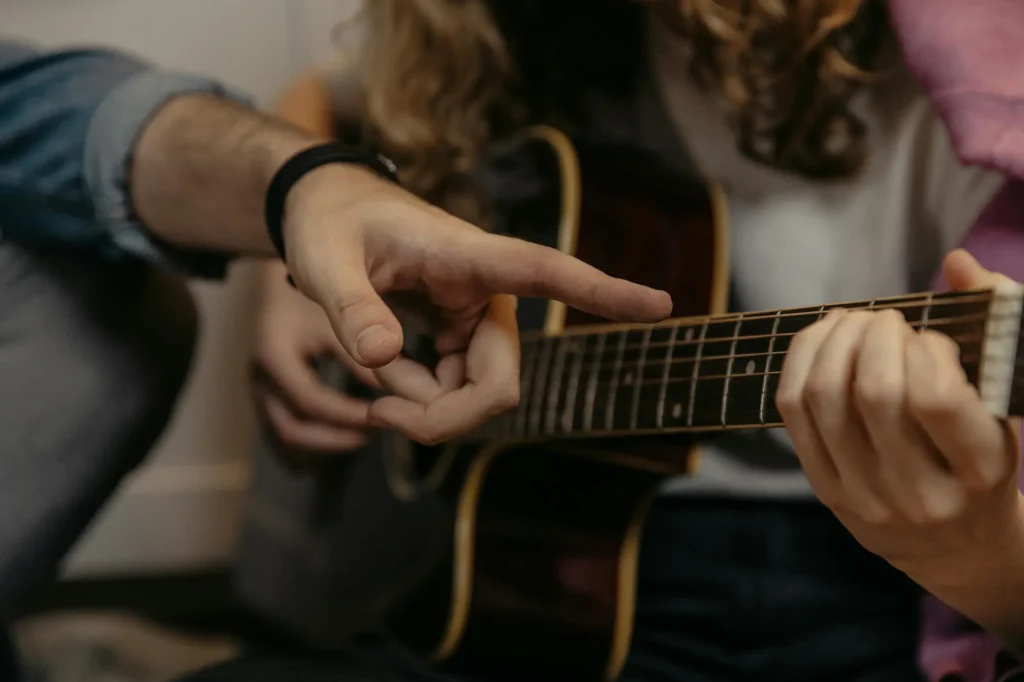
Close-up of a guitar teacher pointing to finger placement on the fretboard during a lesson.

3. Instrument & Lesson Type

The cost of private music lessons in Surrey can also vary depending on the type of lesson you’re booking, the instrument you’re learning, and the format of delivery.

Instrument Choice

Some instruments tend to be more expensive to learn than others. For example:

  • Piano, strings and woodwind instruments often carry higher rates due to the complexity of the instrument and the experience required to teach them well.
  • Guitar, drums and voice lessons tend to be slightly more affordable, though this can still depend heavily on the teacher’s background.
  • Specialist or orchestral instruments, like the oboe or harp, may cost more due to the niche nature of the tuition and the limited number of available teachers.

Private vs Group Lessons

Private lessons offer one-on-one attention and customised learning, making them ideal for students who want focused progress, are preparing for exams, or have specific musical goals. These lessons are generally priced higher, but they allow for tailored feedback and a pace that suits the individual.

Group lessons, on the other hand, are more affordable and provide a fun, social learning environment—especially beneficial for younger learners or beginners who thrive with peer interaction. While progress may be slightly slower in a group setting, the cost savings can be significant. Group lessons are typically:

  • Ideal for children starting out
  • Lower in cost per student (e.g. £10–£20 per session depending on group size and length)
  • Great for general skill-building and ensemble playing

At The Music Works, we offer both private and group formats depending on age, ability and personal preference—giving families flexible options for how they want to learn.

Lesson Format: Home, Online, or In-School

  • Home Lessons – These are convenient but usually include a travel fee. Expect slightly higher rates than in-school or studio-based lessons.
  • Online Lessons – A popular and often more cost-effective option, particularly useful for flexible scheduling and learning from the comfort of home.
  • In-School or After-School Lessons – Often subsidised or offered in a shorter 20–30 minute format, these lessons are budget-friendly and great for younger students learning during the school day.

No matter your instrument or format preference, our schools in Godalming, Haslemere and Guildford are set up to offer a wide range of lesson types to suit every learner and every budget.
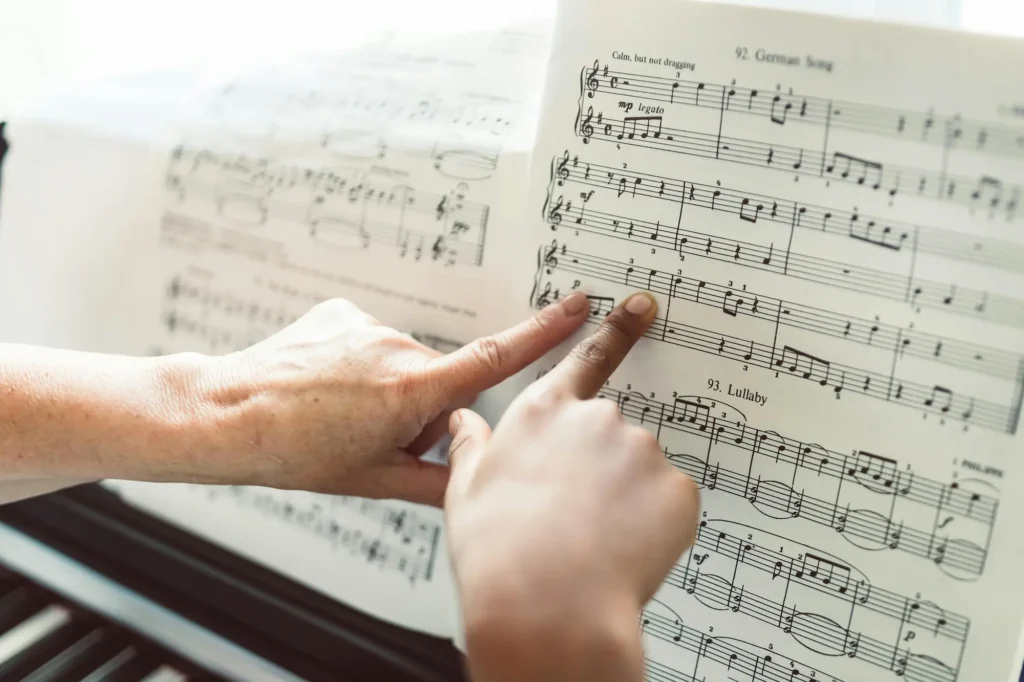
music-lesson-reading-sheet-music-piano

Music Lesson Prices in Godalming, Haslemere or Guildford – Compared

Wondering how much are music lessons in Godalming, Haslemere or Guildford compared to other local schools? Here’s a detailed look at lesson prices in Surrey (as of March 2025):

The following prices are for one-hour private lessons unless otherwise stated:

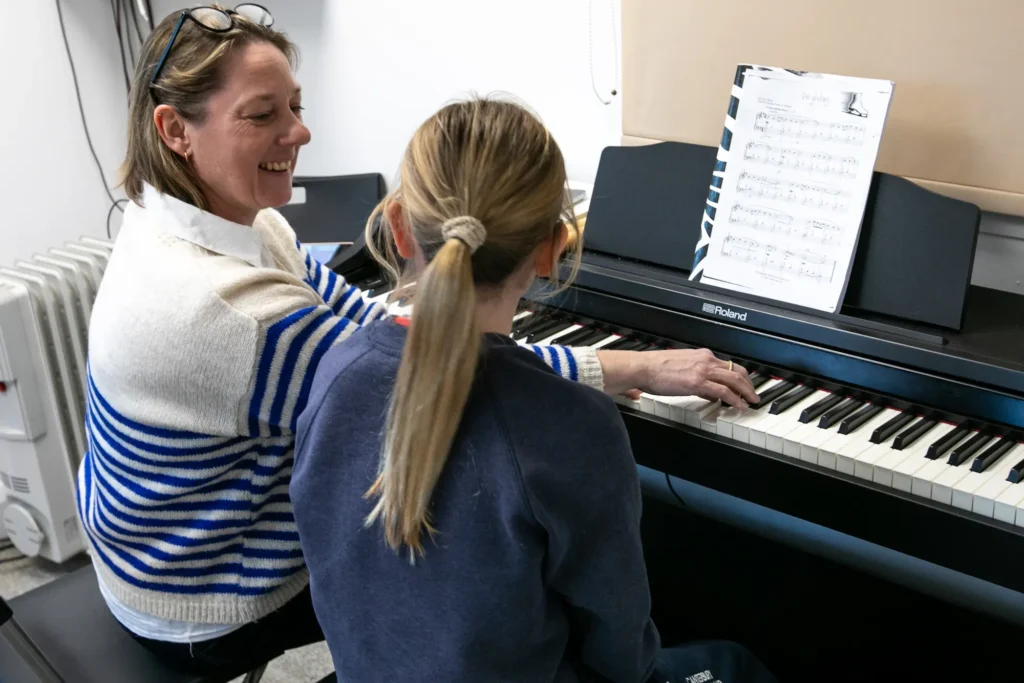
Piano teacher from The Music Works giving a private piano lesson to a school-aged child.

What’s the Average Price of Music Lessons?

  • Most lessons in the region fall between £25 and £45 per hour
  • Top-tier schools and specialist teachers may charge £70 or more
  • Half-hour sessions often cost £20 to £30

So, if you’re looking for affordable music lessons in Godalming, Haslemere or Guildford, The Music Works offers excellent value with professional tutors and a local touch.

Why The Music Works?

We proudly serve students across Godalming, Haslemere and Guildford, offering consistently priced lessons with high-quality teachers. Whether you’re a beginner or a budding performer, we’ll help you navigate how much music lessons cost in Surrey—and get the most from every session.

Click here to get your infopack with our latest prices.
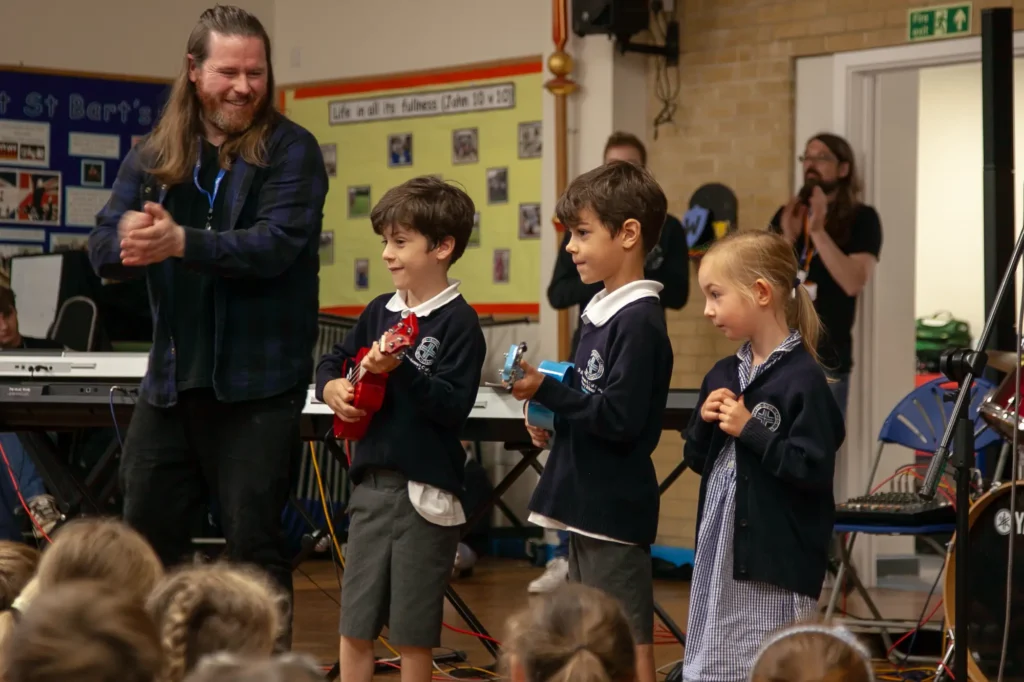
Music tutor from The Music Works applauding primary school children playing ukuleles in a school assembly.

Frequently Asked Questions

How much do private music lessons cost in Surrey?

Private lessons typically cost between £25 and £70 per hour, depending on the teacher, instrument and location.

Are there affordable music lessons in Godalming, Haslemere or Guildford?

Absolutely. The Music Works provides high-quality, affordable music lessons in Godalming, Haslemere and Guildford, with consistent pricing across all locations.

What’s the cheapest way to take music lessons?

Online lessons or in-school group sessions tend to be more cost-effective. However, private lessons offer more personalised progress—and we keep them affordable.

Do home lessons cost more?

Yes, home lessons often include a travel surcharge. If you’re looking for better value, try lessons at one of our local music schools.

Learn More About Lessons Near You

Not sure which format or location suits you best? Explore all our Surrey music schools.

How Much Do Music Lessons Cost in Surrey? (Godalming, Haslemere & Guildford Guide) Read More »
A hand drawing musical notes and sharp symbols on a blackboard with white chalk

Self-Learning vs Learning with a Teacher: Best Way to Learn Music

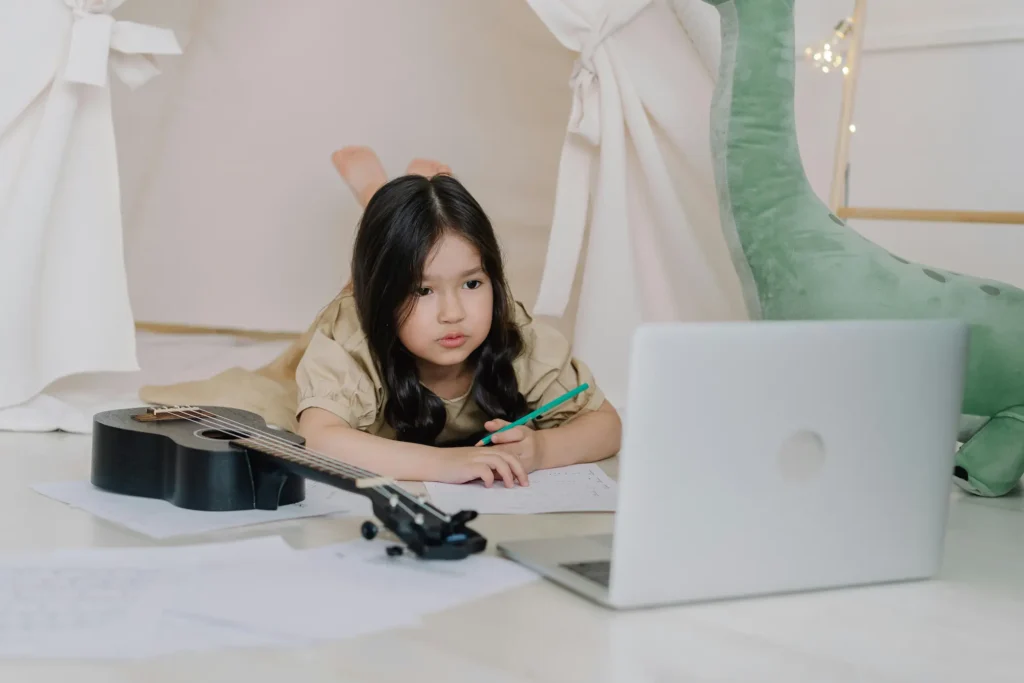
A young girl lying on the floor with a ukulele, taking notes while watching an online music lesson on her laptop.

Should You Pay for Lessons or Teach Yourself?

With the rise of free online resources, especially YouTube, many aspiring musicians ask: Why pay for online music lessons when I can learn for free? While platforms like YouTube offer a wealth of information, they don’t always provide the structured approach needed for real progress. Let’s dive in and get to the bottom of whether free, online music lessons are the best way to learn an instrument.

The Challenges of Self-Learning

🚨 Watch Out for Bad Habits

Many students come to us after months or years of teaching themselves through free online music lessons. Unfortunately, we often have to correct bad habits that have developed along the way. Poor posture, incorrect finger placement, and inefficient playing techniques can slow progress and even lead to injuries like repetitive strain.

⏳ Research Takes Time

One of the biggest drawbacks of self-learning is the time spent researching rather than actually practicing. Without a teacher, you have to figure out what to learn next, how to structure your lessons, and whether you’re applying techniques correctly.

❌ Lack of Personalised Feedback

Watching a video tutorial doesn’t provide the instant feedback needed to correct mistakes. You may think you’re playing correctly, but without an expert eye, you might be reinforcing poor technique.

The Value of Learning with a Music Teacher

🎯 A Structured Learning Path

A teacher provides a clear and structured curriculum, ensuring you master fundamental skills before advancing. For example, our guitar lessons in Guildford take students from absolute beginners to confident players with step-by-step guidance.

🔥 Motivation & Accountability

One of the biggest benefits of music lessons with a teacher is having someone to keep you accountable. A teacher provides encouragement, sets achievable goals, and celebrates your progress. This is especially useful if you’re learning an instrument like piano—our piano teachers in Guildford ensure students stay engaged and progress effectively.

🛠️ Immediate Feedback & Corrections

Unlike self-learning, a music teacher can correct mistakes in real-time, helping you avoid developing bad habits that might take years to fix. Immediate feedback allows you to improve faster and more efficiently.

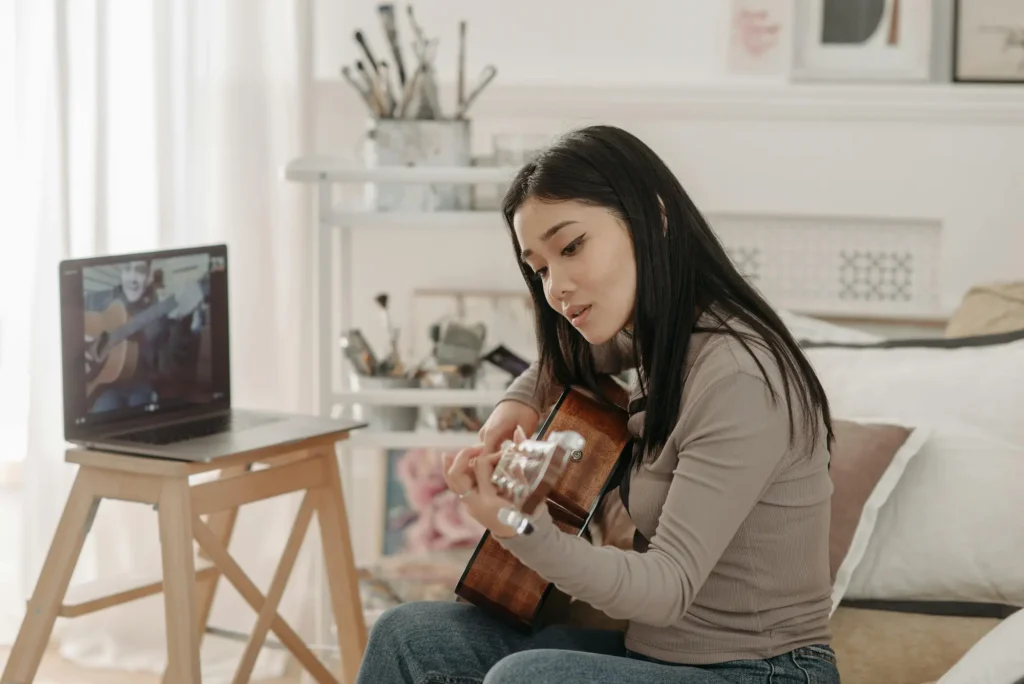
A young woman playing the guitar while following an online music lesson on her laptop.

The Role of Online Resources

So, is YouTube bad for learning music!? Not at all! Platforms like YouTube and apps such as Yousician or Simply Piano can be valuable supplemental tools. However, they should be used alongside structured lessons, not as a replacement for them. Even excellent teachers on Youtube are not able to give you as a student any feedback in the moment, which is a huge part of effective progression on your instrument.

Pros and Cons of Self-Learning vs Learning with a Teacher

Self-Learning Pros & Cons

Pros:

✔️ Inexpensive
✔️ Learn at your own pace
✔️ Wide variety of free content available
✔️ Replay lessons as many times as needed

Cons:

❌ No clear learning pathway—time-consuming research required
❌ No feedback—risk of developing bad habits
❌ No guarantee of lesson quality—anyone can post an online music lesson
❌ Lack of motivation—no one pushing you to improve

Learning with a Teacher Pros & Cons

Pros:

✔️ Structured, personalised lessons
✔️ Immediate feedback to correct mistakes
✔️ Motivation and accountability
✔️ Faster progress with expert guidance
✔️ Lessons tailored to your musical goals

Cons:

❌ Finding the right teacher can take time (but we’ve got you covered with our expert tutors!)
❌ Cost—lessons require an investment

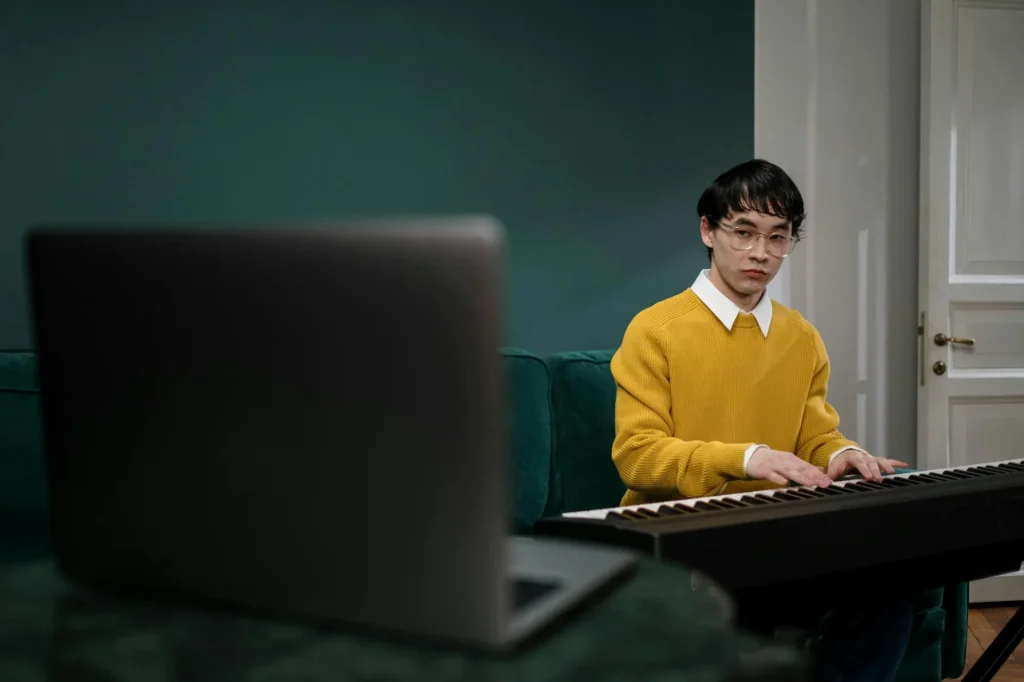
A young man in a yellow sweater playing a digital piano while attending an online music lesson on his laptop

Conclusion: What’s the Best Option?

If you’re serious about learning an instrument, a mix of structured lessons and online resources is the best approach. While self-learning offers flexibility, professional guidance helps ensure progress, correct technique, and long-term success.

We offer expert music lessons for beginners and advanced players alike. Whether you want to master an instrument or simply improve your skills, our experienced instructors are here to help at our dedicated music schools in Godalming, Haslemere & Guildford.

Ready to Start Your Musical Journey?

Book a lesson today and experience the difference professional guidance can make! Click here to get started.

Self-Learning vs Learning with a Teacher: Best Way to Learn Music Read More »

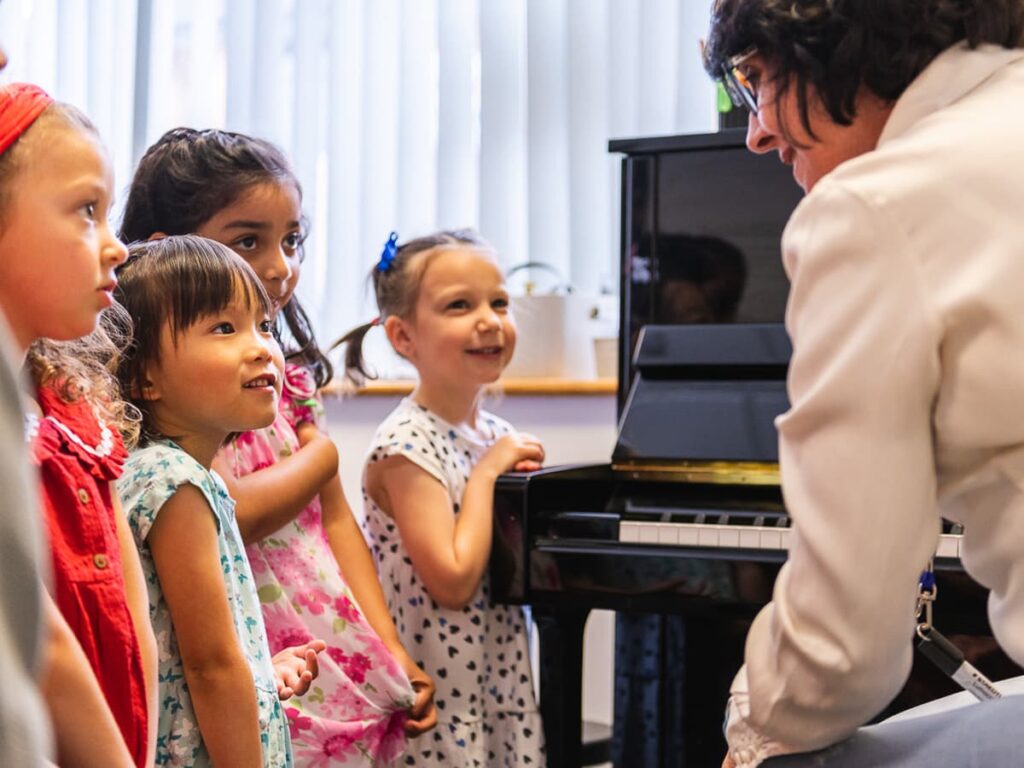
A group of young children attentively listening to a music teacher near a piano in a bright classroom.

Why It’s Never Too Early to Start Music Lessons for Toddlers & Preschoolers

A group of young children attentively listening to a music teacher near a piano in a bright classroom.

Why Early Childhood Music Education Matters

Parents often ask, “At what age can my child start learning an instrument, and which one should they play?” While there is no single perfect age, starting between four and eight years old is ideal.

Mozart often watched his older sister practice piano and began learning the basics himself at just three years old. By the time he was five, he had already composed his first Minuet and Trio in G major.

Starting music lessons early can strengthen self-confidence, improve coordination, and develop patience and stamina. Learning an instrument also provides a great way for children to express their emotions while improving their math, reading, listening, and comprehension skills. Finally, it fosters a sense of achievement and personal growth.

A nurturing environment is key to making lessons fun, engaging, and suitable for young learners. At The Music Works, we specialise in helping young children take their first musical steps.

Why Music Lessons at a Young Age Help with Brain Development

Research shows that learning music at an early age has long-term cognitive and social benefits. Studies from the Massachusetts Institute of Technology and Harvard University suggest that early childhood music education enhances language skills, memory, and emotional intelligence.

Key benefits of starting music lessons early:

🎵 Boosts Brain Development – According to a study published in the Journal of Neuroscience, children who start learning an instrument before the age of seven develop stronger connections between the left and right hemispheres of the brain, improving memory and problem-solving skills.

🎵 Enhances Mathematical Thinking – Research from the University of California, Irvine found that children exposed to early music education perform 27% better on math tests than their peers. Music strengthens pattern recognition, counting skills, and spatial awareness.

🎵 Develops Emotional Intelligence – Studies show that learning to play an instrument helps young children develop self-discipline, patience, and emotional regulation. A report from McMaster University found that toddlers who participate in music lessons display higher levels of empathy and social bonding.

🎵 Improves Listening and Comprehension Skills – A Stanford University study found that musicians’ brains are better at processing language and distinguishing sounds. This advantage helps children develop better reading and communication skills from an early age.

By integrating music lessons for preschoolers into a child’s routine, parents can give them a head start in cognitive development, emotional expression, and social confidence. If you’re considering enrolling your child in a structured program, learn more about our Yamaha Junior Music Course here.

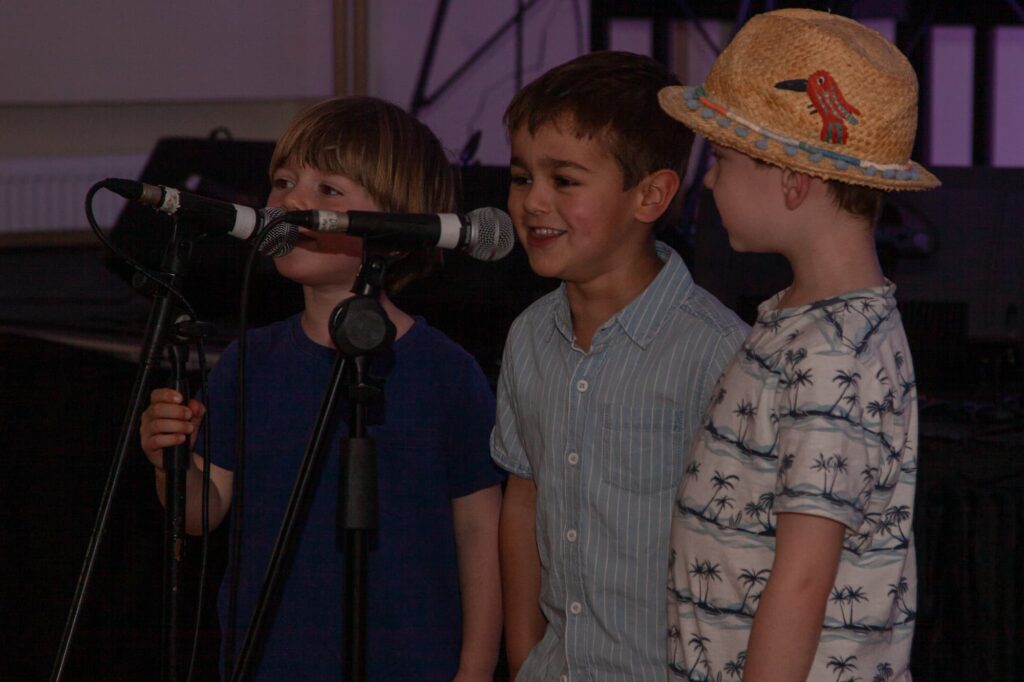
Three young boys singing into microphones during a live music performance at The Music Works.

Choosing the Right Instrument for Your Child

At The Music Works, children can begin music lessons from the age of four with the Yamaha Junior Music Course. This is an excellent introduction to structured learning, setting the foundation for musical growth. From age six, the ukulele is a great first string instrument, while students aged eight and above can explore drums, guitar, singing, piano or band skills.

The Yamaha Junior Music Course is Yamaha’s flagship educational program designed for young learners aged four to five. At this stage, children develop absolute pitch, a strong sense of harmony, and the ability to recognise musical phrases. The structured approach enables students to understand music deeply, making it easier for them to transition to multiple instruments later on. Book a trial lesson today to see how our programs work.

How the Yamaha Junior Music Course Helps Young Learners

The goal of the Yamaha Junior Music Course is to help children sing what they hear, play what they sing, and compose music in a natural and expressive way. By using the keyboard as a learning tool, this approach builds a strong foundation for musical creativity. The course uses engaging storybook-style materials and introduces music as a language, allowing children to learn in a joyful and intuitive way.

Parents are encouraged to sit in on lessons, making the experience interactive, social, and fun for young learners.

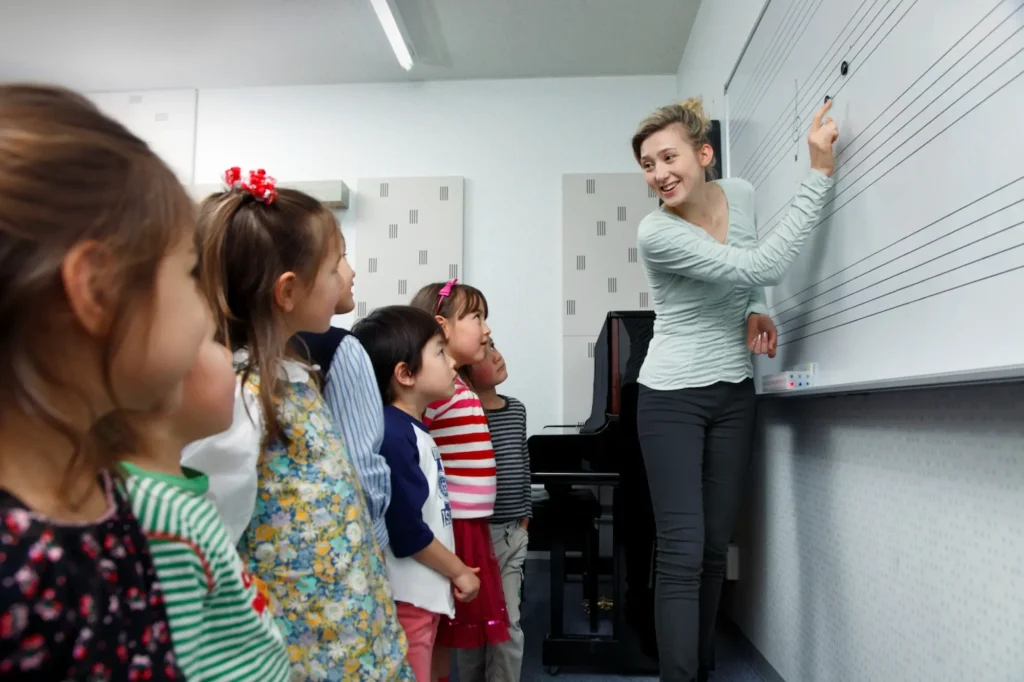
A group of young children attentively watching their music teacher explain notes on a whiteboard in a classroom.

A Success Story in Progress

When James first joined The Music Works at just four and a half years old, he was full of curiosity but had never played an instrument before. He started his creative journey in the Yamaha Junior Music Course, where he learned through an ear-before-eye approach, developing his natural sense of pitch, rhythm, and musical creativity.

Through weekly lessons and a supportive learning environment, James quickly gained confidence in both his playing and performance skills.

In May 2024, James took to the stage at our Yamaha Junior Music Course concert at the Wilfrid Noyce Theatre in Godalming, delivering a solo performance of Somewhere Only We Know by Keane. He wasn’t just playing the piano—he was singing too, showcasing the expressive and technical skills he had developed. This is brilliant to see with a 10-year-old student, developing not only a passion for instruments and performance, but also the confidence to share his art on stage.

Now let’s rewind before we fast-forward. Once James reached Chandler Junior School, he also began exploring other instruments while continuing his weekly Yamaha Junior Music Course lessons. He took up the drums and joined The Music Works’ band skills sessions, expanding his musical versatility.

Now at 11-years-old, James is a multi-instrumentalist who thrives in live performances. Whether behind the piano, on the drums, or singing in a band, his enthusiasm and dedication to music shine through in everything he does. Check out James and his band, Six at Six, performing Sweet Dreams (Are Made Of These) by the Eurythmics!:

James’ story is a great example of how starting music lessons early can set a child on a path of musical growth, creativity, and confidence, all aspects that he will be able to bring into his adult life.

Frequently Asked Questions

What is the best age to start music lessons?

Most experts recommend starting music lessons between the ages of four and eight, when children are highly receptive to learning new skills. Younger children can benefit from structured programs like the Yamaha Junior Music Course, which introduces music in a fun and engaging way.

What makes the Yamaha Junior Music Course special?

The Yamaha Junior Music Course uses an ear-before-eye approach, helping young children develop a deep understanding of music before reading notation. This builds strong listening skills, musical creativity, and confidence in performance.

Can my child switch instruments later?

Yes! The skills developed in early music education make it easier to transition to other instruments later on. Many students who start with the Yamaha Junior Music Course move on to play multiple instruments, including drums, guitar, and more.

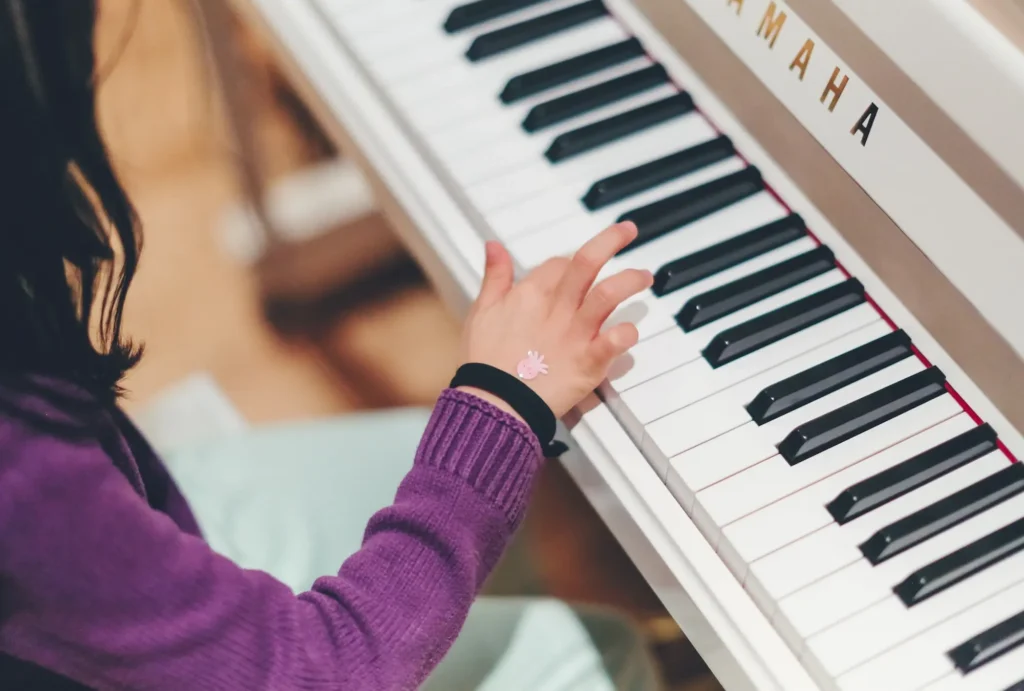
A young child practicing piano on a Yamaha keyboard, focusing on finger placement and technique.

How to Enroll in the Yamaha Junior Music Course

We are fortunate to have an experienced Yamaha Junior Music Course teacher at our Milford Centre, and due to high demand, we operate a waiting list. To secure a place, we recommend signing up early, ideally after your child’s third birthday. Secure your child’s spot today.

Why It’s Never Too Early to Start Music Lessons for Toddlers & Preschoolers Read More »

Excited Young Musicians Celebrate Success at The Music Works Workshop

Shottermill Infant School Ukulele Performance

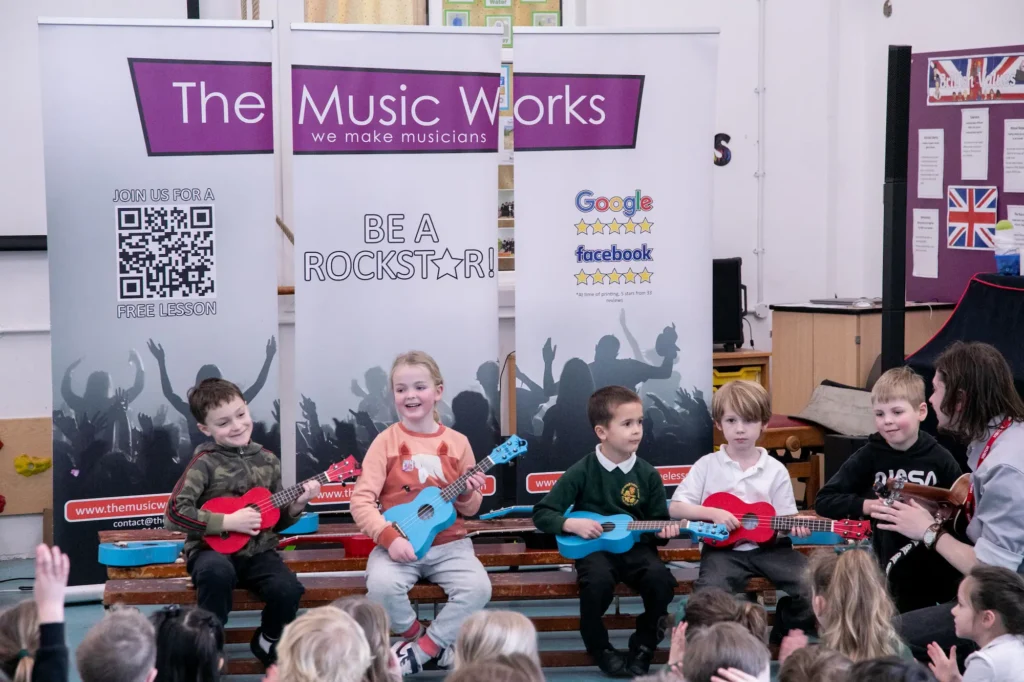
A group of children smiling and playing guitars during a school music workshop led by an instructor from The Music Works.

A Milestone for Young Musicians in Haslemere

On 11th March 2025, Shottermill Infant School in Haslemere hosted a heartwarming event where young students showcased their musical talents in a live ukulele performance. For many of these children, this was their first experience performing in front of an audience, and it was an event they will remember for years to come. With the support of their in-school ukulele teacher and a group of encouraging educators, the students took to the stage with confidence, filling the room with joy and energy.

A Truly Special Ukulele Performance for Young Musicians

The performance featured students playing a range of songs, starting as smaller individual groups and later coming together as one large ensemble. The ukulele, an accessible and fun instrument, was at the heart of the event, with each group adding its own unique style to the music. For many of the children, the performance was more than just about playing music; it was a chance to express themselves, collaborate with others, and step outside their comfort zones.

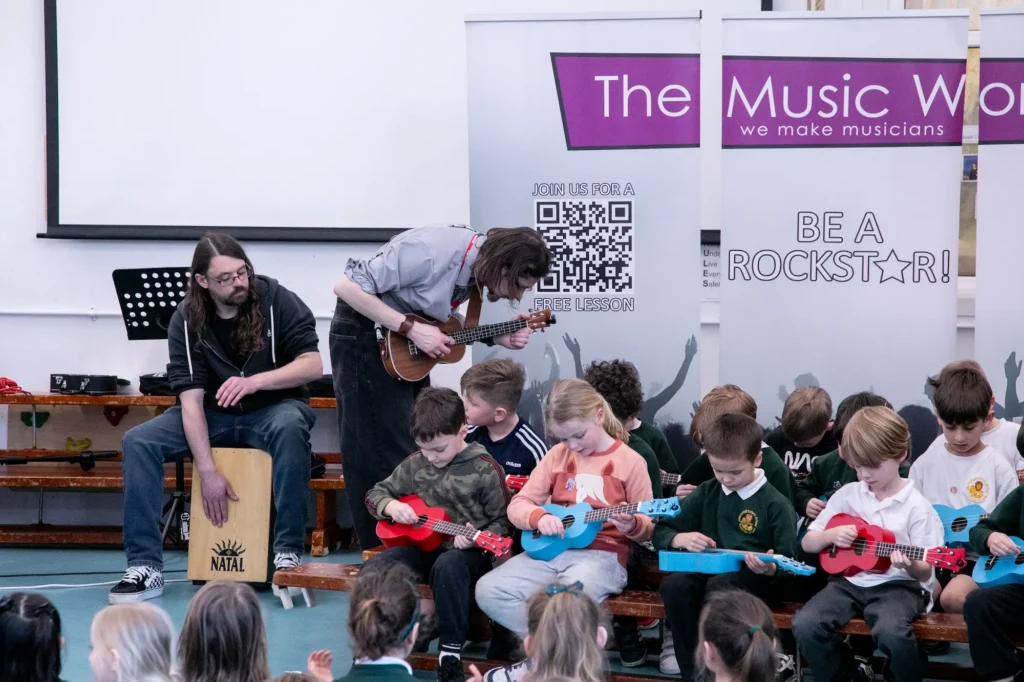
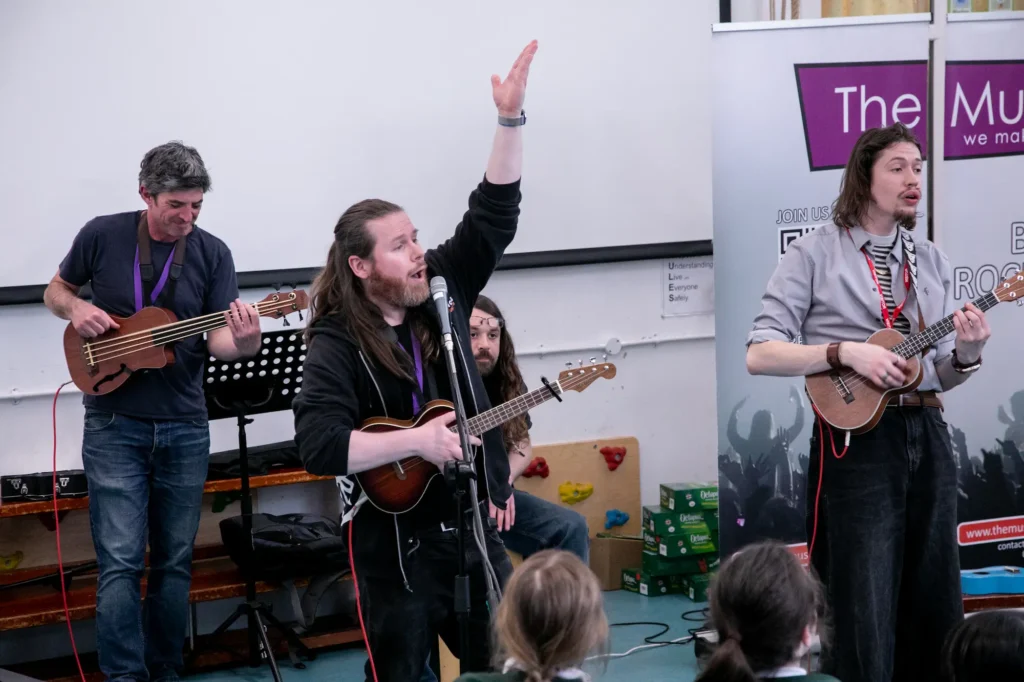
What made the event even more special was the involvement of the teachers. They weren’t just there to supervise but also took part in the performance, playing instruments such as the cajon, bass ukulele, and ukulele, and even singing. This collaboration showed the students that music is a shared experience, and that their teachers were right there with them every step of the way.

The students worked together as a team, supporting each other throughout the performance. This highlighted the positive impact of their music lessons, where they learned not only technical skills but also the importance of collaboration and encouragement, creating a supportive and uplifting atmosphere.

Are you keen for your child to experience ukulele like the children at Shottermill Infant School!? Try a free ukulele lesson in Haslemere by clicking here.

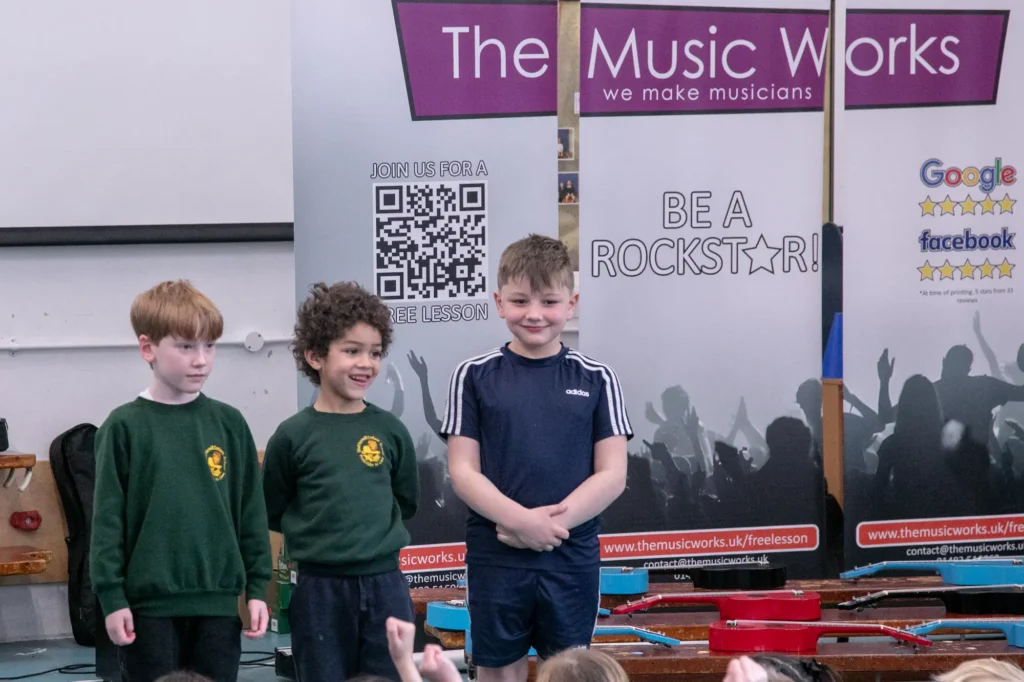
Three children stand proudly in front of The Music Works banners after participating in a school music workshop.

The Role of the Music Teacher in Supporting Young Musicians

The students’ music teacher played an essential role in their success, offering guidance and support throughout their musical journey. For many of the performers, it was their first live performance, and it’s natural to feel a mixture of excitement and nervousness before stepping onto the stage. Thanks to the teacher’s clear instructions, gentle encouragement, and steady presence, the students felt confident and supported, knowing they had someone familiar by their side during such an important moment.

The teacher’s role went beyond simply teaching the songs; they were also there to help the students manage the emotions that often accompany live performances. Their consistent support throughout the term ensured the students felt prepared and capable of managing any nerves with the right mindset.

A Warm and Supportive Audience of Parents and Peers

One of the most touching aspects of the performance was the incredibly supportive audience. Parents, schoolchildren, and staff filled the room, creating an atmosphere of kindness and encouragement. For the students, knowing their families were there to cheer them on gave them a sense of pride and security. The smiles, applause, and cheers from the audience constantly reminded the children that their hard work was being recognized and celebrated.

This warm and friendly environment alleviated any pre-performance anxiety, allowing the students to focus on their music rather than on the possibility of making mistakes. Performing in front of peers and loved ones created a positive space, where the energy from the crowd, combined with the camaraderie between the students, turned the performance into a joyful celebration of achievement.

Children playing guitars while an instructor and a percussionist guide them during a school music workshop by The Music Works.

The Emotional Impact of Live Performance for Young Students

Performing live for the first time is a significant emotional experience that has a lasting impact on young students. The excitement, nerves, and sense of accomplishment that come with performing in front of an audience contribute greatly to a child’s emotional growth and resilience. Check out this great article from Music Mark for more info on the benefits of learning the ukulele on a kids’ attitude.

For young musicians, their first live performance is a major milestone, offering incredible benefits. Not only does it provide a confidence boost, but it also helps them learn how to manage those pre-performance nerves. During the performance at Shottermill Infant School, one student felt emotional and nervous just before taking the stage. However, with the teacher’s support and the comforting atmosphere of the event, the student was able to perform and left the stage with a big smile. This moment of affirmation is transformative and demonstrates why live showcases like these are so impactful for young performers.

For many of the students, the ukulele performance will mark a key moment in their development, helping them build confidence and resilience. Preparing for and performing in front of others teaches children how to push through discomfort, face challenges head-on, and believe in their abilities.

The emotional benefits of live performances extend far beyond the event itself. The sense of accomplishment that comes after performing live helps children develop a healthy sense of pride and self-worth. This contributes to fostering a growth mindset, encouraging children to take on new challenges. Through these performances, students also gain important life skills such as focus, perseverance, and teamwork—qualities that will benefit them in all aspects of life.

Supporting Growth Through Music at Shottermill Infant School

At Shottermill Infant School, the focus is always on putting children at the heart of everything they do, ensuring that they are safe, happy, and eager to learn. The recent ukulele performance is a perfect example of this approach. For many young performers, it was their first time stepping onto a stage, and the experience allowed them to grow in a supportive environment where their confidence could flourish. With encouragement from their teachers and the cheers of a welcoming audience, the children were able to embrace the importance of perseverance and teamwork—skills that will serve them well both in their creative journey and beyond.

Shottermill Infant School’s ethos of nurturing every child’s potential was clearly evident in how the music programme was structured in collaboration with The Music Works. The performance was about more than just playing an instrument; it was an opportunity to embrace the joy of learning, express creativity, and celebrate personal achievements. The sense of community at Shottermill was on full display, with teachers, students, and parents coming together to make the event a success. Parents could see firsthand how the school’s collaborative approach to education positively impacts their children’s emotional and social development.

A group of musicians performing with ukuleles, a bass guitar, and percussion during a school music workshop by The Music Works.

A Holistic Approach to Education at Shottermill Infant School

Shottermill Infant School believes in providing a rich and well-rounded educational experience for every child. The recent ukulele performance is just one example of how the school fosters not only academic excellence but also creativity, confidence, and resilience. Events like these encourage students to engage in active learning, a core value at the school. They are encouraged to participate in activities that spark their curiosity and help build their skills in a fun, collaborative way.

Music plays an important role in this process as it allows children to express themselves in ways that words alone cannot. The performance provided the students with an opportunity to showcase their musical abilities while also developing key skills such as working together, listening to others, and overcoming challenges in a supportive environment. For parents, watching their children take part in such a rewarding experience reinforces the school’s commitment to nurturing the whole child—preparing them not just for academic success but for a well-rounded and fulfilling life.

Lasting Memories and Future Potential at Shottermill Infant School

At Shottermill Infant School, every child is seen as an individual with unique potential, and the ukulele performance served as a wonderful testament to that belief. For many students, it was their first experience of performing live, and the impact of that moment will stay with them for years. The school’s focus on emotional well-being and active learning ensures that students like these young musicians are given the opportunity to grow in confidence, creativity, and resilience.

The performance allowed the children to embrace values such as perseverance, teamwork, and self-expression. These skills, nurtured in a supportive environment, will continue to help the children grow both inside and outside the classroom. The event also highlighted Shottermill Infant School’s focus on community and collaboration, as the school works closely with The Music Works and parents to support the development of every child. As these young musicians move forward, they will carry with them the powerful memory of their first live performance, which will inspire them to reach new heights and continue developing their musical talents.

Are you a part of a local school that is interested in talking with The Music Works about bringing our award-winning music lessons to your school? Click here to enquire about becoming a Partner school!

Shottermill Infant School Ukulele Performance Read More »

Scroll to Top