Why Early Childhood Music Education Matters
Parents often ask, “At what age can my child start learning an instrument, and which one should they play?” While there is no single perfect age, starting between four and eight years old is ideal.
Mozart often watched his older sister practice piano and began learning the basics himself at just three years old. By the time he was five, he had already composed his first Minuet and Trio in G major.
Starting music lessons early can strengthen self-confidence, improve coordination, and develop patience and stamina. Learning an instrument also provides a great way for children to express their emotions while improving their math, reading, listening, and comprehension skills. Finally, it fosters a sense of achievement and personal growth.
A nurturing environment is key to making lessons fun, engaging, and suitable for young learners. At The Music Works, we specialise in helping young children take their first musical steps.
Why Music Lessons at a Young Age Help with Brain Development
Research shows that learning music at an early age has long-term cognitive and social benefits. Studies from the Massachusetts Institute of Technology and Harvard University suggest that early childhood music education enhances language skills, memory, and emotional intelligence.
Key benefits of starting music lessons early:
🎵 Boosts Brain Development – According to a study published in the Journal of Neuroscience, children who start learning an instrument before the age of seven develop stronger connections between the left and right hemispheres of the brain, improving memory and problem-solving skills.
🎵 Enhances Mathematical Thinking – Research from the University of California, Irvine found that children exposed to early music education perform 27% better on math tests than their peers. Music strengthens pattern recognition, counting skills, and spatial awareness.
🎵 Develops Emotional Intelligence – Studies show that learning to play an instrument helps young children develop self-discipline, patience, and emotional regulation. A report from McMaster University found that toddlers who participate in music lessons display higher levels of empathy and social bonding.
🎵 Improves Listening and Comprehension Skills – A Stanford University study found that musicians’ brains are better at processing language and distinguishing sounds. This advantage helps children develop better reading and communication skills from an early age.
By integrating music lessons for preschoolers into a child’s routine, parents can give them a head start in cognitive development, emotional expression, and social confidence. If you’re considering enrolling your child in a structured program, learn more about our Yamaha Junior Music Course here.
Choosing the Right Instrument for Your Child
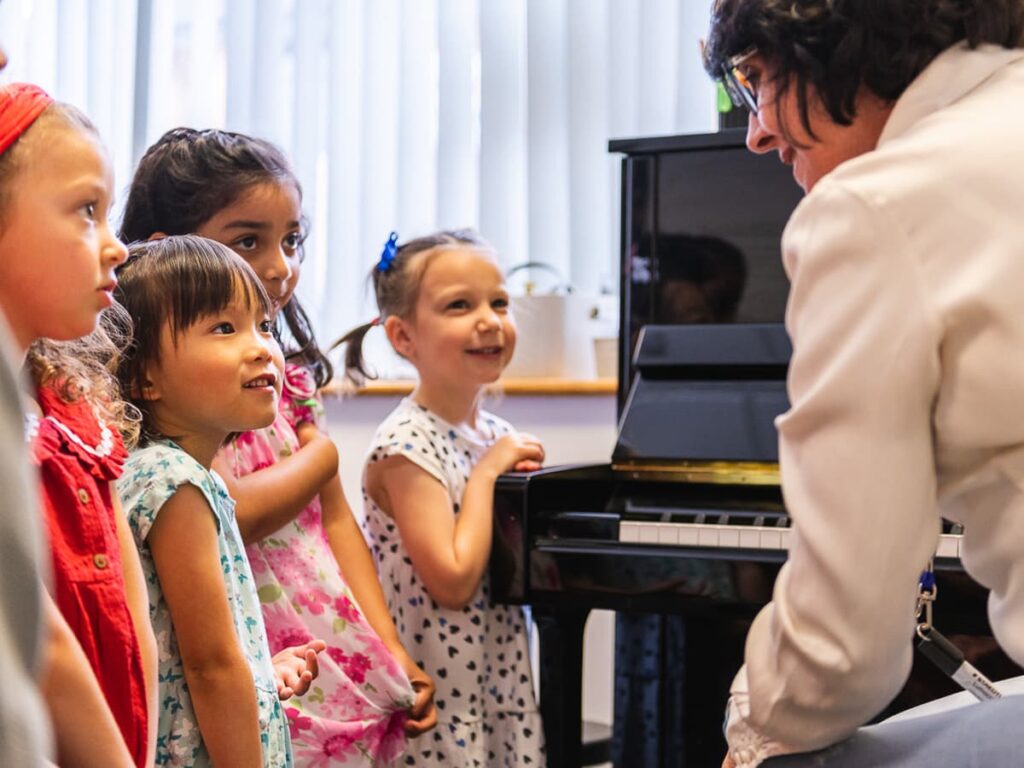
At The Music Works, children can begin music lessons from the age of four with the Yamaha Junior Music Course. This is an excellent introduction to structured learning, setting the foundation for musical growth. From age six, the ukulele is a great first string instrument, while students aged eight and above can explore drums, guitar, singing, piano or band skills.
The Yamaha Junior Music Course is Yamaha’s flagship educational program designed for young learners aged four to five. At this stage, children develop absolute pitch, a strong sense of harmony, and the ability to recognise musical phrases. The structured approach enables students to understand music deeply, making it easier for them to transition to multiple instruments later on. Book a trial lesson today to see how our programs work.
How the Yamaha Junior Music Course Helps Young Learners
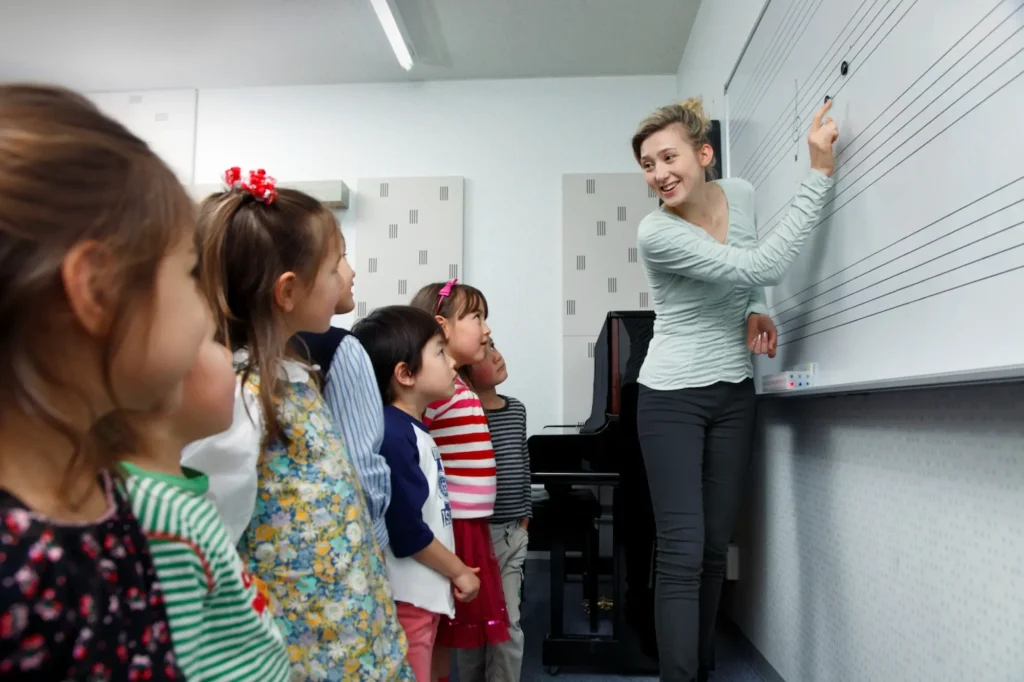
The goal of the Yamaha Junior Music Course is to help children sing what they hear, play what they sing, and compose music in a natural and expressive way. By using the keyboard as a learning tool, this approach builds a strong foundation for musical creativity. The course uses engaging storybook-style materials and introduces music as a language, allowing children to learn in a joyful and intuitive way.
Parents are encouraged to sit in on lessons, making the experience interactive, social, and fun for young learners.
A Success Story in Progress
When James first joined The Music Works at just four and a half years old, he was full of curiosity but had never played an instrument before. He started his creative journey in the Yamaha Junior Music Course, where he learned through an ear-before-eye approach, developing his natural sense of pitch, rhythm, and musical creativity.
Through weekly lessons and a supportive learning environment, James quickly gained confidence in both his playing and performance skills.
In May 2024, James took to the stage at our Yamaha Junior Music Course concert at the Wilfrid Noyce Theatre in Godalming, delivering a solo performance of Somewhere Only We Know by Keane. He wasn’t just playing the piano—he was singing too, showcasing the expressive and technical skills he had developed. This is brilliant to see with a 10-year-old student, developing not only a passion for instruments and performance, but also the confidence to share his art on stage.
Now let’s rewind before we fast-forward. Once James reached Chandler Junior School, he also began exploring other instruments while continuing his weekly Yamaha Junior Music Course lessons. He took up the drums and joined The Music Works’ band skills sessions, expanding his musical versatility.
Now at 11-years-old, James is a multi-instrumentalist who thrives in live performances. Whether behind the piano, on the drums, or singing in a band, his enthusiasm and dedication to music shine through in everything he does. Check out James and his band, Six at Six, performing Sweet Dreams (Are Made Of These) by the Eurythmics!:
James’ story is a great example of how starting music lessons early can set a child on a path of musical growth, creativity, and confidence, all aspects that he will be able to bring into his adult life.
Frequently Asked Questions
What is the best age to start music lessons?
Most experts recommend starting music lessons between the ages of four and eight, when children are highly receptive to learning new skills. Younger children can benefit from structured programs like the Yamaha Junior Music Course, which introduces music in a fun and engaging way.
What makes the Yamaha Junior Music Course special?
The Yamaha Junior Music Course uses an ear-before-eye approach, helping young children develop a deep understanding of music before reading notation. This builds strong listening skills, musical creativity, and confidence in performance.
Can my child switch instruments later?
Yes! The skills developed in early music education make it easier to transition to other instruments later on. Many students who start with the Yamaha Junior Music Course move on to play multiple instruments, including drums, guitar, and more.
How to Enroll in the Yamaha Junior Music Course
We are fortunate to have an experienced Yamaha Junior Music Course teacher at our Milford Centre, and due to high demand, we operate a waiting list. To secure a place, we recommend signing up early, ideally after your child’s third birthday. Secure your child’s spot today.